


OOC: The Playable Anime
4.34.45K Reviews
App Specs
- Version
- 0.1.27
- Updated On
- License
- Free
- Downloads
- 1,000,000+
- Developer
- OOC
- Categories
- Books & Reference
- Platform
- Android
Screenshots

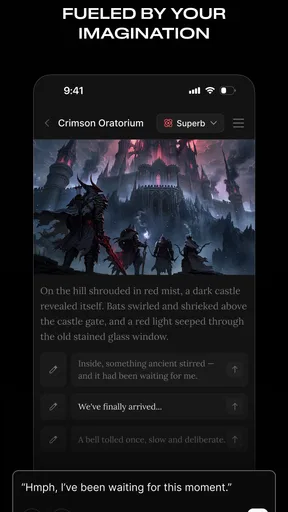
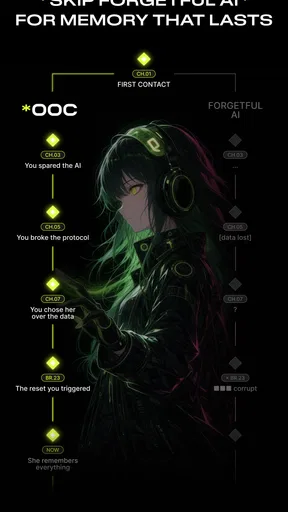
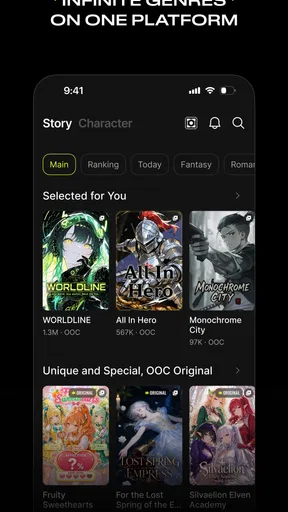
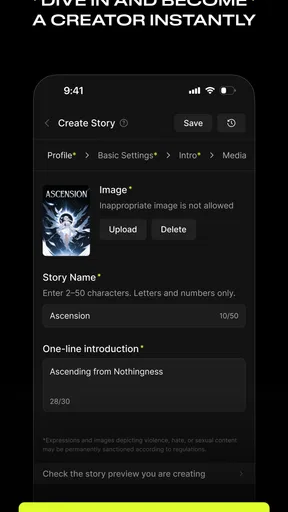
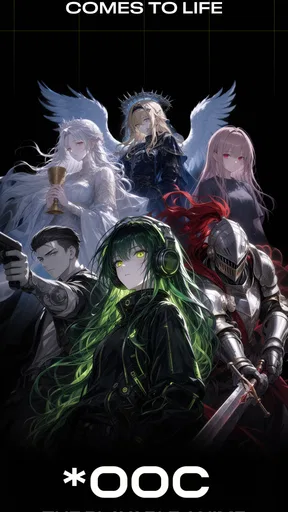
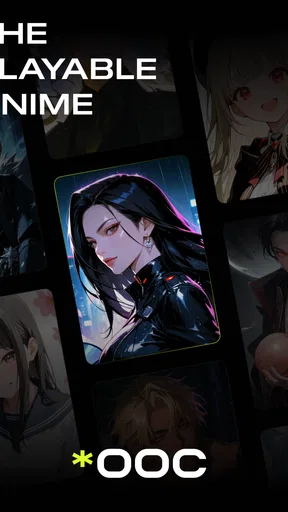
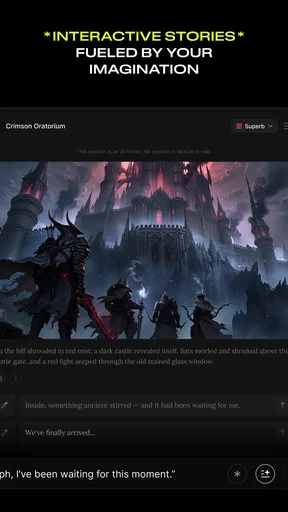
 Analysis by AppCompare
Before choosing an interactive reading app, I’d ask what I want my spare-time story sessions to feel like. Do I want to disappear into a finished narrative, shape how a character responds, or watch a story performed on screen? OOC: The Playable Anime is aimed at the middle option: it is a Books & Reference app from OOC built around anime-inspired fiction and reader participation. I find that distinction more useful than treating it as a general-purpose reading tool.
The app is free to install, has a Teen content rating, and is on version 0.1.23. Its average rating is 4.2, based on around 25,000 ratings, and it has passed a million installs. Those numbers show that plenty of readers have tried it, but they cannot settle the key question for you: whether you enjoy stopping to make decisions inside a story. I’d judge it by that fit, rather than by its category or popularity alone.
What kind of reading experience to expect
I’d use this section to set expectations before weighing the app against books, anime, or story games: the key question is whether you enjoy reading fiction while making choices along the way. I’d also consider how much quiet attention I can give a session, since a story is easier to follow when I’m not tapping through it in a rush.
A story you take part in
The most useful way to think about this app is as interactive fiction with an anime sensibility. Rather than opening it for reference material or practical information, I’d use it when I’m in the mood to read a character-driven story and engage with it as it progresses. That distinction matters: the appeal is not simply that it contains text, but that the reader’s imagination and participation are part of the pitch.
That format suits small pockets of free time. I can imagine opening a chapter during a commute or while waiting for a friend, then returning to the story later when I’m ready to pay closer attention. It is also a natural fit for readers who enjoy discussing what they would choose in a fictional situation. The experience asks for more involvement than passive reading, even if the exact amount of interaction can vary between stories.
I would not treat it as a substitute for watching anime. A screen adaptation gives you performances, motion, sound, and a fixed interpretation of the scene; interactive reading leaves more of that work to you. That can be a strength if you like building the setting in your head, but a drawback if what you want is polished audiovisual storytelling.
Who is likely to enjoy it
I’d recommend giving it a look if you already enjoy anime-inspired fiction, branching narratives, or stories where imagining your own response is part of the fun. It may also work for someone who finds a standard novel a little too passive but still wants a reading-first activity rather than a conventional game. The app’s Teen content rating makes it relevant to teen readers, though parents should still use their own judgement about whether a particular story suits their household.
Worth Reading Before You Choose

Flipboard Shows What News Apps Must Do Beyond the Feed

Switching to Android Auto Means Rethinking Your Driving Routine

Google Calendar Makes a Crowded Week Easier to Manage

Ludo King Makes the Most of the Minutes Between Plans

Baby Panda World Brings Quick Play to Modern Phones, but Its Game Library Feels Busy

ESPN’s Live Game View Makes Following Close Games Easier
It is less suited to readers who want a quiet, linear book with no decisions to make. It may also frustrate anyone who expects a large reference library or an encyclopedia of anime facts: its Books & Reference category does not mean it functions like a traditional reference tool. The central appeal is narrative participation, not looking up information.
Where its format has an advantage
Compared with a standard ebook reader, a playable story can give me a reason to pause and think about what I want a character to do, rather than simply turning the page. Compared with a visual novel or story game, it asks me to meet the story through reading and imagination instead of relying on a familiar game structure. Those are meaningful differences for people who want fiction in a middle ground between book and game.
There is a trade-off, though. Interactive fiction can make a story feel personal, but it can also make pacing less predictable than a conventional chapter. If I’m reading for a tightly controlled plot or a carefully composed literary voice, a traditional novel is likely the safer choice. If I want agency to be part of the entertainment, this format has a more distinctive case.
Practical ways to get more from it
One useful approach is to decide what kind of session you want before opening a story. If I have only a few minutes, I’d read without rushing choices just to reach an endpoint; the point is to enjoy the scene, not to turn it into a task. When I have longer, I can pay attention to how my decisions affect the way I interpret the characters, even if I’m not trying to optimize an outcome.
A second tip is to treat choices as expressions of taste, not as a test with a correct answer. In interactive fiction, readers sometimes try to guess the “best” option and end up making decisions that do not feel like their own. I’d rather choose what seems believable to me, then see whether the story’s tone rewards that approach. This makes the experience more satisfying and gives a clearer sense of whether the writing suits me.
It can also help to keep expectations modest when starting out. A short visit is a good way to find out whether the combination of anime-inspired fiction and reader input works for you before committing much attention. If you discover that you want more depth, you can decide whether to continue; if you find that you miss the freedom of a fully open game or the flow of a regular book, that is a useful answer too.
What to weigh before installing
OOC is free to install, which makes trying the basic experience a low-commitment decision. It also offers in-app purchases, with items ranging from about a dollar and forty cents to nearly one hundred and forty-three dollars. That is a wide span, so I would check what an individual purchase provides and whether it is optional before spending. I would not assume that paying is necessary to enjoy the app, nor that every purchase represents the same kind of content.
For a reader who is cautious about spending, the practical rule is to explore first and buy only when a specific item clearly matches what you want. The highest listed price is substantial for an app purchase, so it is worth slowing down rather than treating an in-app prompt as part of the story. If you are setting up a device for a teen, it is sensible to review purchase controls as well as the content rating.
The app is developed by OOC and has an average rating of 4.2 from around 25,000 ratings, alongside roughly 4,000 written reviews. It has been installed over a million times. Those figures suggest that it has found an audience, but they cannot tell me whether its particular style will suit you; interactive storytelling is especially dependent on personal taste.
Device and version considerations
The current version is 0.1.23, and the stated minimum operating system is 7.0. Before installing, I’d check that my device meets that requirement and that the app is available for the platform I use. The release date is April 3, 2026. These details are worth knowing if you are comparing it with older reading apps or deciding whether to install it on a device used by several people.
Because a story app is something I may return to over time, I’d also consider how it fits my reading habits. If you prefer to keep every book in one established reader, adding a separate app may feel like unnecessary friction. If you are happy to use a dedicated space for interactive fiction, that separation can be useful: it gives this kind of reading its own place rather than mixing it with reference material or long-form books.
Alternatives and the cost of switching
The best alternative depends on what you actually want from the story. For a finished narrative with steady pacing, choose an ordinary ebook or audiobook. For a plot presented through animation, choose an anime viewing service. For deeper control over a character’s actions, a visual novel or narrative game may be a closer match. Those categories overlap with OOC’s idea, but they put different emphasis on reading, performance, and player agency.
Switching from a regular book is easy in one sense: you can simply try a different style of fiction. The cost is mainly attention and habit. You may need to get used to making decisions instead of following a single authored route, and you might not find that engaging every day. I would keep a conventional book nearby if you rely on reading to unwind and sometimes want something that asks nothing of you beyond turning the page.
Switching from a game has the opposite trade-off. You may appreciate that the experience is centered on story, but miss the broader systems and hands-on play that games often provide. If your ideal evening involves exploration, action, or strategy, an interactive anime novel may feel too narrow. If you want a fiction-led experience that still invites personal input, its more focused scope may be exactly the point.
A useful way to test the fit
For a realistic first session, I’d open it when I have a quiet ten minutes rather than in the middle of a rushed task. On a train ride, for example, I could read a scene, make a choice based on how I think a character would act, and then put the phone away when I reach my stop. That tests the central appeal without requiring a long commitment. It also shows whether I can comfortably pick up the story again after a break.
One small but worthwhile habit is to notice why a choice appealed to you before tapping it. Was it consistent with the character as you understand them, or did you choose it because you hoped it would lead to a particular result? That distinction can make the story more engaging, and it avoids turning every branch into a puzzle to solve. If you are reading with a friend, comparing those instincts afterward can create a conversation without needing to agree on a single “right” route.
I’d also separate the question of whether the format works from whether a particular story does. A reader can enjoy interactive anime fiction but still find one narrative’s tone unconvincing; a single disappointing session does not necessarily mean the whole idea is a poor match. Conversely, enjoying the novelty of a choice does not guarantee that you’ll want to keep reading. I’d look for sustained interest in the characters and scenes, not just the moment of making a decision.
My recommendation
Overall, I’d try OOC: The Playable Anime if you’re curious about interactive fiction and want an anime-flavored reading experience that leaves room for your imagination. Its strongest reason to exist is the space between a conventional book and a story game: it can make reading feel more active without asking you to approach it like a full game. That is a specific appeal, not a universal improvement over other formats.
I’d skip it if you want a dependable reference app, a passive linear read, or an anime series to watch. I’d also be careful with in-app purchases, especially if a teen will use the device. For readers who enjoy choosing how they respond to fictional situations, the free install gives a straightforward way to see whether the format clicks. My advice is to start with curiosity, follow choices that feel natural, and continue only if the storytelling itself—not just the novelty of making choices—keeps you interested.
Pros
- A focused way to explore the world and characters of OOC.
- Playable scenes make the experience more interactive than a standard anime video.
- Suitable for anime fans looking for a short
- casual experience.
- The anime-inspired presentation gives the game a distinct visual identity.
- Can be enjoyed at your own pace without needing multiplayer partners.
Cons
- The experience may feel limited if you prefer traditional
- hands-on gameplay.
- Its appeal is likely strongest for players already interested in anime.
- Playable content may offer less freedom than a full-length adventure game.
- Some scenes may feel brief to players seeking a longer game.
- Performance and availability can vary across devices and operating systems.
FAQs for OOC: The Playable Anime
What is OOC: The Playable Anime?
OOC: The Playable Anime is an interactive entertainment app that blends anime-inspired storytelling with gameplay. Rather than simply watching a series, you take part in the experience through playable scenes and choices, with the exact format depending on the content available in the current version. Check the app’s store listing and screenshots before downloading to see which stories, characters, and features are included.
Is OOC: The Playable Anime free to download and play?
The app’s price and available content can vary by platform, region, and version. Even if the initial download is free, some stories, episodes, or other features may require payment or an in-app purchase. Review the Google Play or App Store listing for current pricing, subscription details, and purchase information, and check your device’s purchase settings if the app will be used by a child.
Does OOC: The Playable Anime work offline?
Offline access depends on how the app delivers its stories and other content. Some interactive experiences require an internet connection to load episodes, verify purchases, or save progress, while previously downloaded material may remain available offline. Before relying on it without Wi-Fi or mobile data, check the app’s listing and test access on your device. Also consider data use if you plan to download content over a mobile connection.
Is OOC: The Playable Anime suitable for children?
Do not assume the anime-inspired presentation makes the app appropriate for every age. Themes, dialogue, illustrations, and interactive scenarios may be intended for older audiences, and the store’s age rating can differ by country or platform. Read the rating and content information on the relevant app store, and review any available parental controls before allowing a child to download or use it.
What should I check before downloading OOC: The Playable Anime?
Confirm that your phone or tablet meets the app’s operating-system and storage requirements, and download it only from the official Google Play Store or Apple App Store. Read recent reviews and the developer’s listing for details about current features, updates, purchases, and privacy practices. If you encounter problems, check that your app and device software are up to date and use the developer’s official support contact.


